
Carbide and Cermet Saw Tips: Understanding Material Choices in Metal Cutting
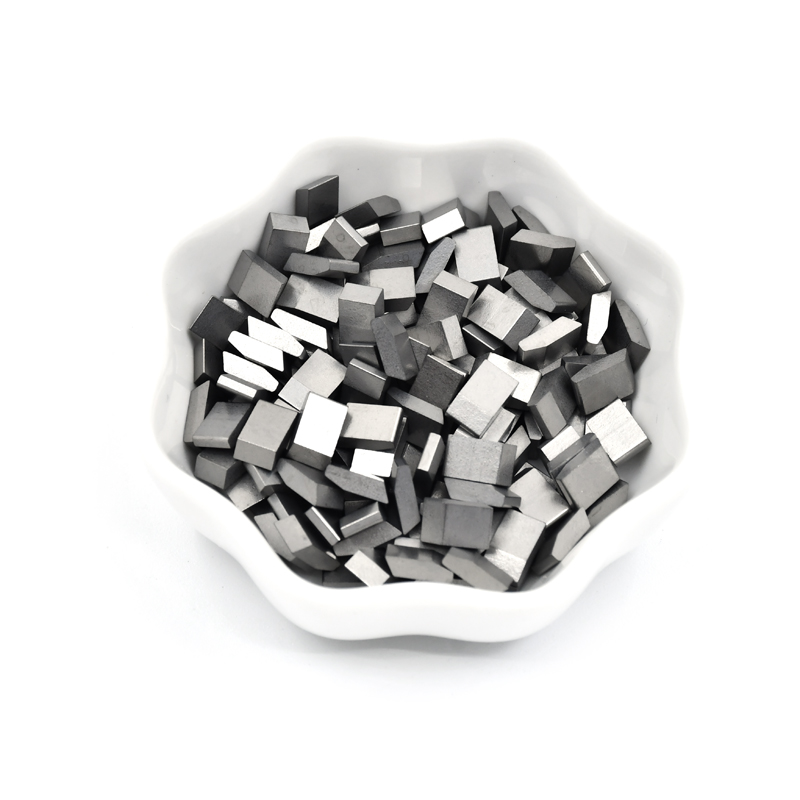
In industrial sawing operations, the cutting performance of a circular saw blade is largely determined by its saw tips—the brazed cutting elements attached to the blade body. These tips directly influence tool life, cutting efficiency, and surface quality.
Today, two material systems dominate the market: tungsten carbide and cermet. Understanding their differences is essential for selecting the right solution under varying cutting conditions.
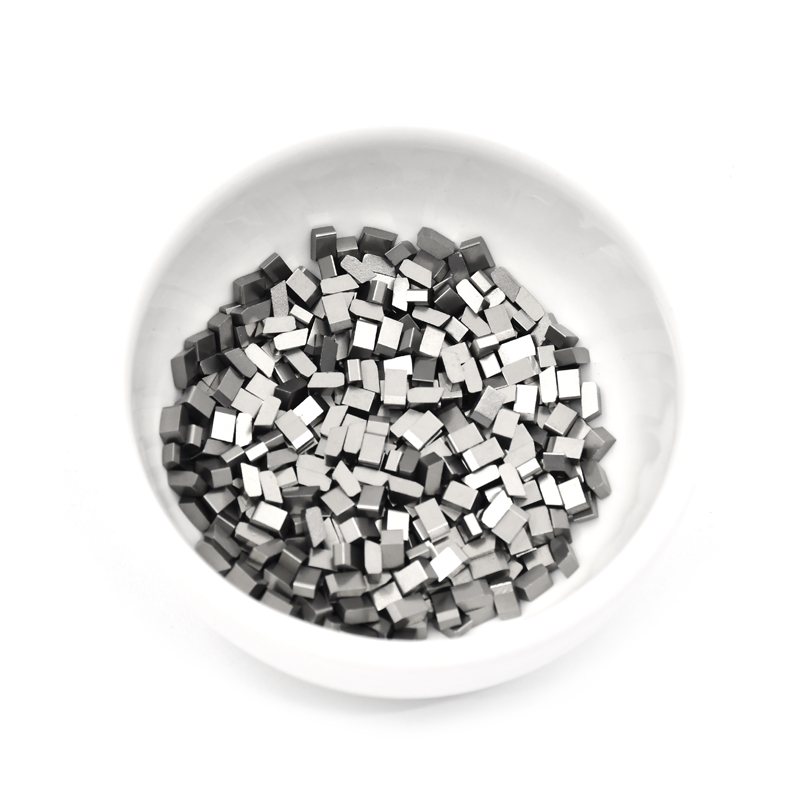
What Are Saw Tips and Why Do They Matter?
Saw tips are precision-engineered inserts brazed onto the edge of a steel saw blade. During operation, each tip engages in repeated interrupted cutting, entering and exiting the workpiece at high speed.
This working mode places unique demands on the material:
• High hardness for wear resistance
• Sufficient toughness to resist chipping
• Thermal stability under friction and heat
• Resistance to adhesion (built-up edge)
Because of these combined requirements, material selection becomes a critical engineering decision rather than a simple cost comparison.
Tungsten Carbide Saw Tips: The Industry Standard
Tungsten carbide (WC-Co) remains the most widely used material for saw tips due to its balanced mechanical properties.
Key Advantages
• Good combination of hardness and toughness
• Strong resistance to mechanical impact
• Reliable performance in interrupted cutting
• Broad applicability across different materials and machines
Typical Applications
• Carbon steel and alloy steel cutting
• Tube and bar cutting
• Applications with vibration or unstable clamping
• General-purpose sawing across mixed conditions
Limitations
• Performance can be affected by rising tungsten raw material costs
• May produce built-up edge in certain steel cutting conditions
• Surface finish may not be optimal in high-speed finishing operations
Cermet Saw Tips: A Specialized Alternative
Cermet materials are typically based on titanium carbonitride (Ti(C,N)) with a metallic binder such as nickel or cobalt. They are widely used in turning inserts and have been gradually explored in sawing applications.
Key Characteristics
• High wear resistance under stable cutting conditions
• Lower chemical affinity with steel, helping reduce built-up edge
• Potential for improved surface finish
• Good thermal stability at higher cutting speeds
Potential Application Scenarios
• Continuous or semi-continuous cutting
• Stable machines with low vibration
• Steel and stainless steel cutting where surface quality is important
• Finishing or semi-finishing operations
Technical Considerations
• Lower fracture toughness compared to carbide
• Higher sensitivity to impact and interrupted cutting
• Performance highly dependent on cutting parameters and setup
Selection Strategy: Matching Material to Application
Rather than replacing one material with another, most industrial users treat carbide and cermet as complementary solutions.
Choose Carbide When:
• Cutting conditions are unstable
• Interrupted cutting is significant
• Machine rigidity is limited
• Heavy-duty or rough cutting is required
Consider Cermet When:
• Cutting conditions are stable and controlled
• Higher cutting speeds are used
• Surface finish is a priority
• Tool wear consistency is critical
Industry Perspective
While carbide continues to dominate sawing applications, cermet is gaining attention as manufacturers seek to optimize performance under specific conditions and manage raw material cost fluctuations.
However, due to the complex nature of sawing operations, real-world testing remains essentialbefore large-scale adoption of any new material.
Our Approach
At Zhuzhou Jinxin Cemented Carbide Group Co., Ltd, we provide both carbide and cermet saw tips. Rather than recommending a one-size-fits-all solution, we work with customers to evaluate:
• Workpiece material
• Machine conditions
• Cutting parameters
• Tool life expectations
Based on these factors, we support customers in selecting—and if necessary testing—the most suitable material for their application.
 Industrial Tungsten Carbide Snow Plow Cutting Edge for Heavy Equipment
The carbide snow cutting edge is designe
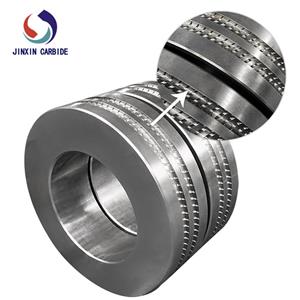 Carbide Roller Cemented Carbide Roll Rings/carbide Roller/tungsten
Tungsten carbide roller ring is a kind o
 Customizable Tungsten Jig Fishing Jig Lure
97% Tungsten high densityFast production
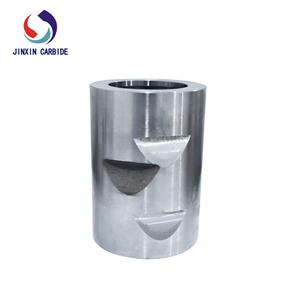 tungsten carbide forming die
Cemented Carbide Cold Heading Dies: Prec
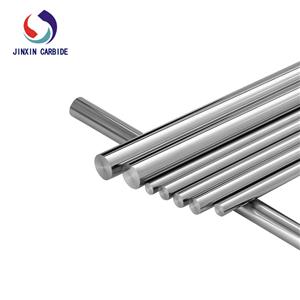 Carbide cutting tools grinding carbide/round carbide rods, Cermet metal rods
1. 100% virgin raw material2. High wear
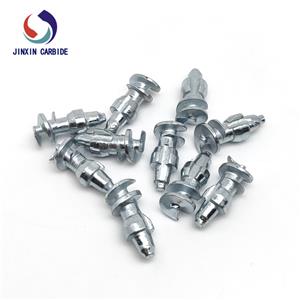 JX174 Removable Srew-in tire Studs Wheel Snow Carbide Spikes
Jinxin Studs are widely used in Northern
| WeChat/Phone : | +86 15573301853 |
|---|---|
| Fax : | +86-731-22332243 |
| Email : | jinxin012@ojinxin.com |