
Enhancing Efficiency in Studded Tire Installation: The Role of Automatic Stud Feeders in Pneumatic Stud Guns
Introduction
As winter tire service operations become increasingly time-sensitive and efficiency-driven, the tools used in studded tire installation are evolving rapidly. While pneumatic stud installation guns have already improved consistency and speed compared to manual tools, the addition of automatic stud feeding systems represents the next step in process optimization.
Automatic stud feeders, designed to be integrated with pneumatic stud guns, enable continuous and consistent stud supply during installation. This advancement significantly improves workflow efficiency, reduces operator fatigue, and enhances overall installation quality.
This article explores the functional role, technical advantages, and practical applications of stud feeders in modern tire service environments.
The Limitation of Manual Stud Handling
In a traditional setup, even when using a pneumatic stud gun, operators often need to manually pick and position each stud before installation. This creates several inefficiencies:
Frequent interruptions in workflow
Slower installation speed
Increased risk of dropping or misaligning studs
Higher operator fatigue during repetitive tasks
In high-volume environments, such as tire shops during peak winter seasons, these inefficiencies can significantly impact productivity.
What Is an Automatic Stud Feeder?
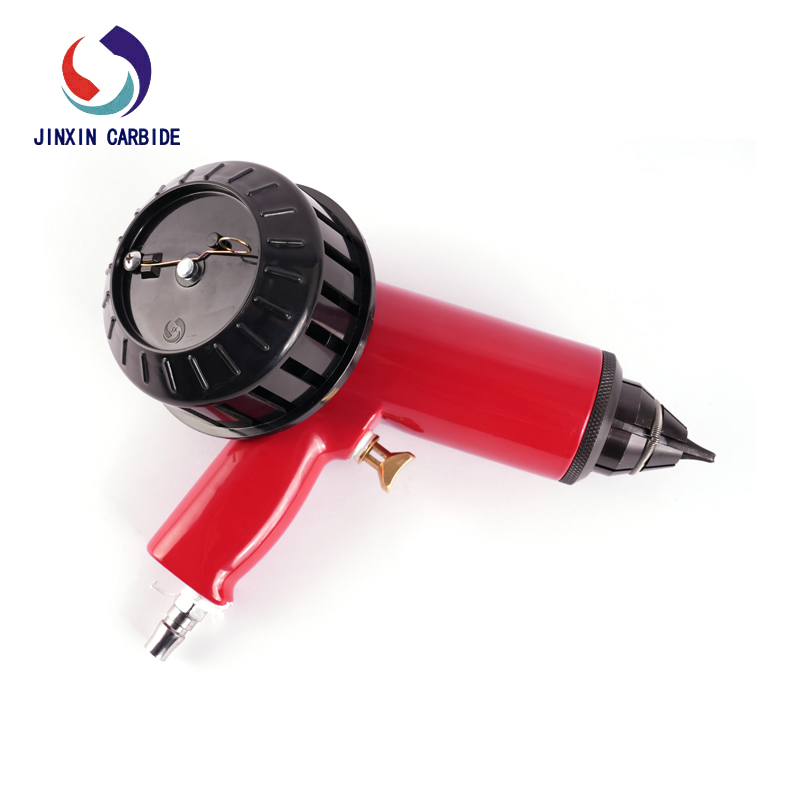
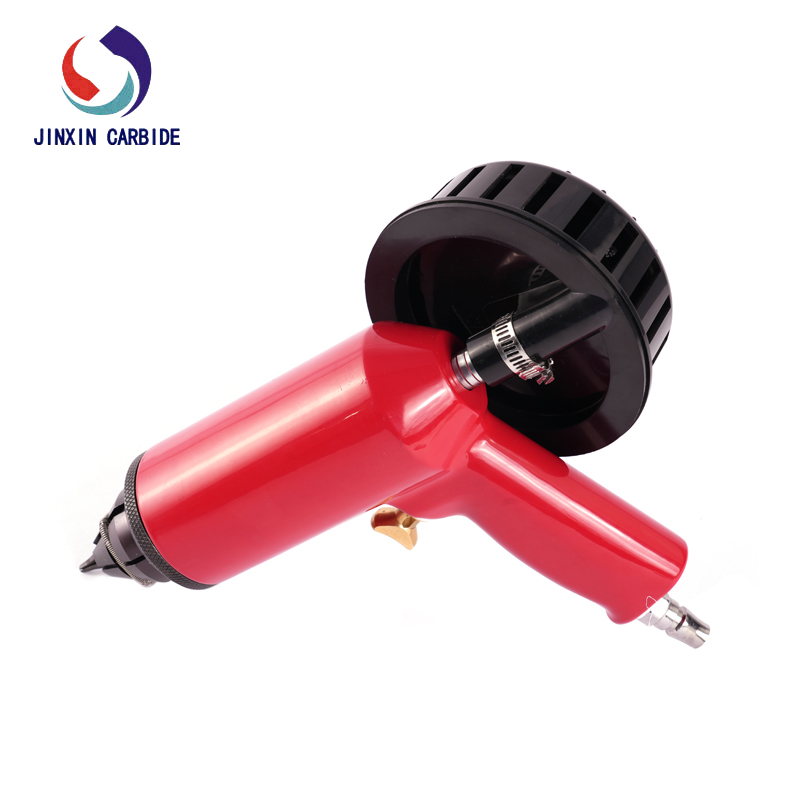
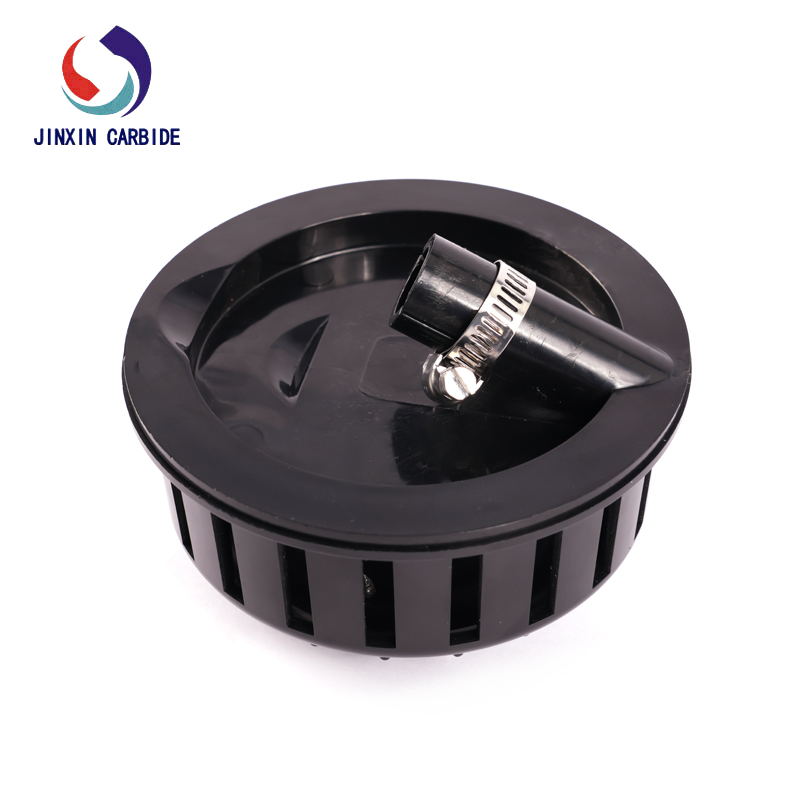
An automatic stud feeder is an accessory system designed to supply studs continuously to a pneumatic stud installation gun. It typically consists of:
A stud storage chamber or hopper
A feeding mechanism (mechanical or pneumatic)
A delivery tube connected to the installation gun
The system ensures that studs are delivered one by one to the gun’s insertion position without manual handling.
Key Advantages of Stud Feeder Systems
1. Continuous Operation
By eliminating the need to manually load each stud, the feeder allows for uninterrupted installation. This is particularly valuable in:
High-volume tire service centers
Fleet maintenance operations
Seasonal tire change periods
2. Increased Installation Speed
Automatic feeding significantly reduces cycle time per stud. Operators can focus solely on positioning the gun and activating the trigger, leading to:
Faster turnaround times
Increased daily output
Improved service capacity
3. Reduced Operator Fatigue
Repetitive manual handling of small studs can be physically demanding over time. A feeder system minimizes hand movements and repetitive actions, resulting in:
Improved ergonomics
Reduced strain on hands and wrists
More consistent performance over long working hours
4. Improved Consistency and Accuracy
With a controlled feeding mechanism, studs are delivered in a consistent orientation and position. This helps:
Reduce misalignment during insertion
Improve uniformity across the tire
Enhance overall installation quality
Integration with Pneumatic Stud Guns
Stud feeders are typically designed to work seamlessly with pneumatic stud installation guns. Key integration factors include:
Compatibility with gun models
Stable connection between feeder and gun
Synchronized feeding and insertion mechanism
A well-integrated system ensures smooth operation without delays or misfeeds.
Technical Considerations
When selecting a stud feeder system, several technical aspects should be evaluated:
Feeding Mechanism Reliability
The system should consistently deliver one stud at a time without jamming or double feeding.
Stud Size Compatibility
Different regions and applications use different stud sizes. The feeder should support the required specifications.
Material Durability
Components should be resistant to wear, especially in cold environments where materials can become brittle.
Ease of Maintenance
Quick access for cleaning and maintenance is important to ensure long-term reliability.
Applications in the U.S. Market
In the United States, studded tire usage is common in regions with harsh winter conditions. Service providers are increasingly adopting automated solutions to improve efficiency.
Typical users of stud feeder systems include:
Tire service centers
Automotive workshops
Commercial fleet operators
Off-road and winter driving specialists
As labor costs rise and service demand increases, automation becomes a key competitive advantage.
Impact on Operational Efficiency
From an operational perspective, adding a stud feeder to a pneumatic stud gun can lead to:
Higher throughput per technician
Reduced installation time per tire
More consistent service quality
Better utilization of labor resources
These improvements can directly affect profitability, especially during peak seasons.
Industry Trends: Automation in Tire Service
The automotive service industry is gradually embracing automation to address labor shortages and efficiency challenges. Tools that reduce manual intervention while maintaining quality are becoming increasingly important.
Stud feeder systems represent a practical and cost-effective step toward semi-automated tire service operations.
Conclusion
While pneumatic stud guns have already improved the process of installing tire studs, the addition of automatic stud feeders takes efficiency and consistency to the next level. By reducing manual handling, increasing speed, and improving ergonomics, these systems provide clear benefits for professional tire service operations.
For businesses looking to enhance productivity and maintain high-quality standards, integrating a stud feeder system is a logical and effective upgrade.
About Our Approach
We develop stud installation solutions designed for real-world working environments, focusing on reliability, ease of use, and compatibility with professional tire service tools.
Our goal is to support customers in improving both efficiency and consistency in their operations.
Contact Us
Interested in improving your stud installation process?
👉 Tell us your stud size and application
👉 Request more information or product details
👉 Get a fast response from our team
Final Insight
Efficiency in repetitive operations is not achieved by working harder—but by working smarter with the right tools.
 Industrial Tungsten Carbide Snow Plow Cutting Edge for Heavy Equipment
The carbide snow cutting edge is designe
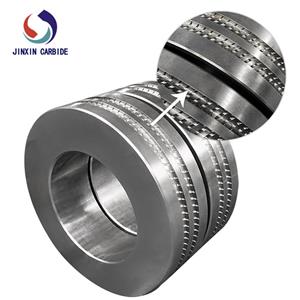 Carbide Roller Cemented Carbide Roll Rings/carbide Roller/tungsten
Tungsten carbide roller ring is a kind o
 Customizable Tungsten Jig Fishing Jig Lure
97% Tungsten high densityFast production
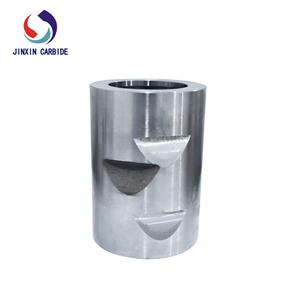 tungsten carbide forming die
Cemented Carbide Cold Heading Dies: Prec
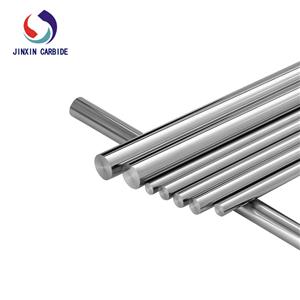 Carbide cutting tools grinding carbide/round carbide rods, Cermet metal rods
1. 100% virgin raw material2. High wear
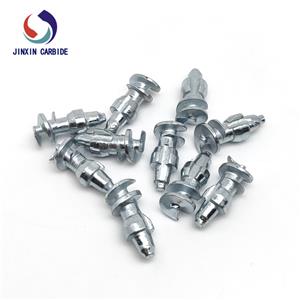 JX174 Removable Srew-in tire Studs Wheel Snow Carbide Spikes
Jinxin Studs are widely used in Northern
| WeChat/Phone : | +86 15573301853 |
|---|---|
| Fax : | +86-731-22332243 |
| Email : | jinxin012@ojinxin.com |