
How Are Custom Carbide Parts Manufactured?
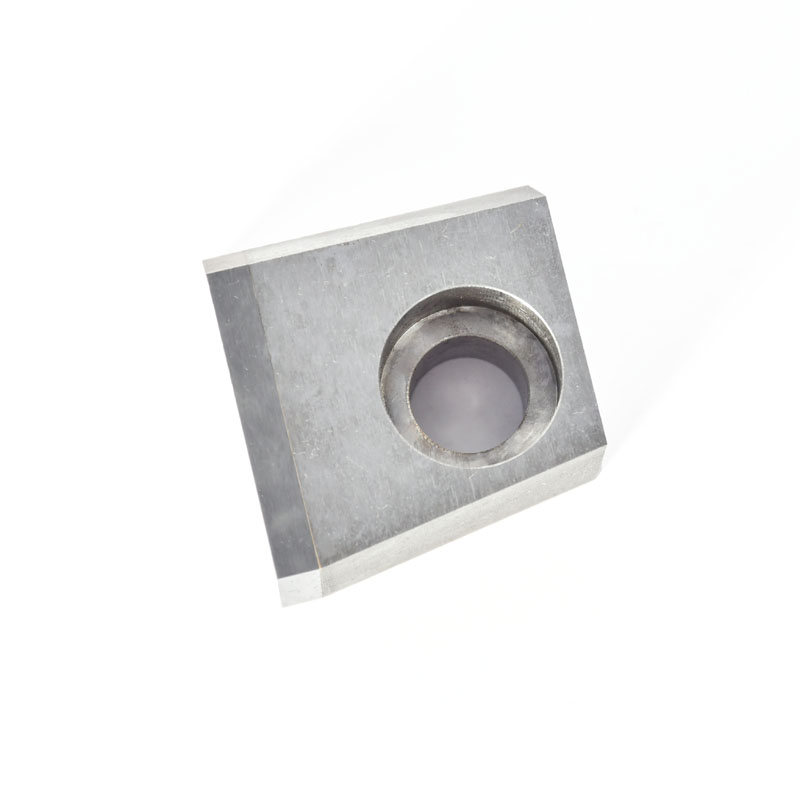
In today's industrial world, standard components do not always meet the requirements of every application. Industries such as mining, oil and gas, agriculture, metalworking, construction, and recycling often require parts designed for specific operating conditions, dimensions, and performance targets.
This is where custom tungsten carbide parts come into play.
From simple wear inserts to complex precision components, custom carbide parts are engineered to provide exceptional wear resistance, durability, and reliability in demanding environments. But how exactly are these parts manufactured?
Let's take a closer look at the journey from concept to finished carbide component.
Understanding the Application Requirements
Every custom carbide project begins with understanding the customer's application.
Before production starts, engineers typically evaluate factors such as:
Working conditions
Wear mechanisms
Impact loads
Operating temperatures
Material being processed
Required service life
Assembly requirements
A component designed for a mining crusher may require very different properties than one used in agricultural machinery or precision metalworking equipment.
The more information available about the application, the better the final carbide solution can be optimized.
Design and Engineering
Once the application requirements are understood, the design phase begins.
Customers may provide:
Technical drawings
CAD files
Sample parts
Performance specifications
In some cases, manufacturers also assist with design optimization to improve:
Wear resistance
Structural strength
Manufacturability
Cost efficiency
Because tungsten carbide behaves differently from steel, proper design considerations are essential for achieving the best performance.
Selecting the Appropriate Carbide Grade
Not all tungsten carbide grades are the same.
Different applications require different combinations of:
Hardness
Toughness
Wear resistance
Impact resistance
Factors that influence grade selection include:
Abrasion severity
Impact frequency
Working environment
Expected lifespan
Choosing the correct carbide grade is one of the most important steps in ensuring long-term performance.
Powder Preparation
The manufacturing process starts with carefully prepared raw materials.
Tungsten carbide powder is blended with a metallic binder, typically cobalt, to create a homogeneous mixture.
At this stage, strict control is maintained over:
Particle size distribution
Chemical composition
Binder content
Mixing consistency
Proper powder preparation helps ensure uniform material properties throughout the finished component.
Pressing and Forming
After mixing, the powder is shaped into a "green compact."
Depending on the part geometry, manufacturers may use:
Die pressing
Cold isostatic pressing (CIP)
Extrusion
Specialized forming techniques
At this stage, the component already resembles its final shape, although it remains relatively fragile and oversized.
Dimensional allowances are intentionally included to compensate for shrinkage during sintering.
Sintering
Sintering is one of the most critical stages in carbide manufacturing.
The pressed component is heated to extremely high temperatures in a controlled furnace environment.
During this process:
The binder phase melts
Carbide particles bond together
Density increases significantly
Material strength develops
The component shrinks as it densifies, eventually achieving the hardness and wear resistance for which tungsten carbide is known.
Precise control of temperature and time is essential to achieve consistent quality.
Precision Machining and Grinding
After sintering, tungsten carbide becomes extremely hard and difficult to machine using conventional methods.
To achieve final dimensions and tolerances, manufacturers often perform:
Diamond grinding
Surface grinding
Cylindrical grinding
Centerless grinding
EDM machining (when required)
This stage ensures that the finished component meets the exact specifications provided by the customer.
For many custom carbide parts, precision grinding is one of the most important manufacturing steps.
Quality Inspection
Before shipment, custom carbide components undergo thorough inspection procedures.
Common quality control measures include:
Dimensional inspection
Density testing
Hardness testing
Visual inspection
Surface finish verification
Depending on the application, additional testing may also be performed to ensure compliance with customer requirements.
Consistent quality control helps guarantee reliable field performance.
Surface Finishing and Assembly
Some custom carbide parts require additional processing before delivery.
These operations may include:
Polishing
Edge preparation
Brazing
Assembly with steel components
Protective packaging
The final finishing process depends on the specific application and customer requirements.
Why Custom Carbide Parts Matter
Custom carbide components allow manufacturers to solve wear problems that standard products cannot address.
Benefits often include:
Longer service life
Reduced downtime
Improved productivity
Lower maintenance costs
Better overall equipment performance
Whether used in mining, construction, agriculture, drilling, recycling, or manufacturing, custom carbide solutions can provide significant operational advantages.
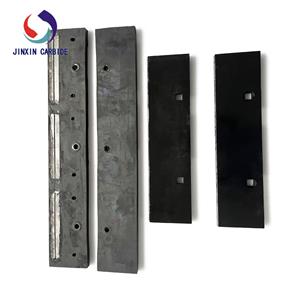 Industrial Tungsten Carbide Snow Plow Cutting Edge for Heavy Equipment
The carbide snow cutting edge is designe
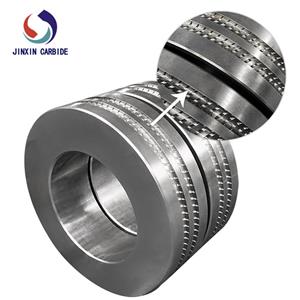 Carbide Roller Cemented Carbide Roll Rings/carbide Roller/tungsten
Tungsten carbide roller ring is a kind o
 Customizable Tungsten Jig Fishing Jig Lure
97% Tungsten high densityFast production
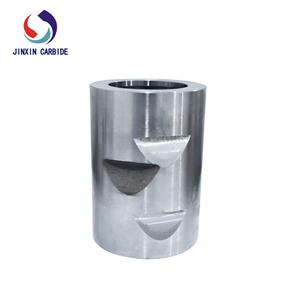 tungsten carbide forming die
Cemented Carbide Cold Heading Dies: Prec
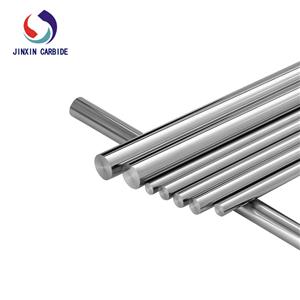 Carbide cutting tools grinding carbide/round carbide rods, Cermet metal rods
1. 100% virgin raw material2. High wear
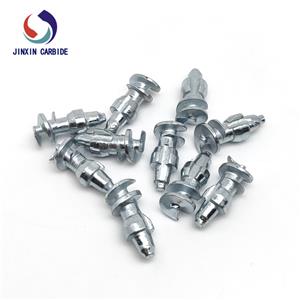 JX174 Removable Srew-in tire Studs Wheel Snow Carbide Spikes
Jinxin Studs are widely used in Northern
| WeChat/Phone : | +86 15573301853 |
|---|---|
| Fax : | +86-731-22332243 |
| Email : | jinxin012@ojinxin.com |