
How to Choose Between Virgin and Recycled Carbide Materials on a Limited Budget
Introduction
When working with a limited budget, selecting the right tungsten carbide material becomes a critical decision. Buyers often face a common question: Should I choose virgin carbide for better performance, or recycled carbide for cost savings?
The answer is not simply about price—it’s about finding the best balance between cost, performance, and application requirements.
Understand Your Application First
Before choosing the material, the most important step is to clearly define how the carbide product will be used.
Ask the following questions:
Is the application high precision or general use?
Will the tool operate under high temperature or high speed?
How critical is product lifespan?
What is the cost of failure or replacement?
If the application is demanding, choosing purely based on price can lead to higher long-term costs.
When to Choose Recycled Carbide (Cost-Effective Option)
Recycled carbide is often the best choice when budget is tight and performance requirements are moderate.
Suitable Situations:
General machining or low-speed operations
Wear parts that are easy to replace
Mining, construction, or rough working environments
Large quantity orders where cost control is essential
Advantages:
Lower upfront cost
Better for bulk purchasing
More sustainable and environmentally friendly
Considerations:
While recycled carbide reduces initial investment, its performance may vary depending on the recycling quality. For non-critical applications, this trade-off is usually acceptable.
When to Choose Virgin Carbide (Performance Priority)
Even with a limited budget, there are cases where virgin carbide is the smarter choice.
Suitable Situations:
High-precision cutting tools (CNC, molds, dies)
High-speed or high-temperature environments
Applications where failure leads to high losses
Products requiring consistent and stable quality
Why It Can Save Money Long-Term:
Longer tool life reduces replacement frequency
Better performance improves production efficiency
Lower risk of defects or downtime
In these cases, choosing cheaper material may actually increase total cost over time.
Smart Strategy: Mix Both Materials
A practical approach many professional buyers use is material optimization—combining both virgin and recycled carbide strategically.
Example Strategy:
Use virgin carbide for critical components or cutting edges
Use recycled carbide for supporting parts or non-critical wear areas
This approach helps reduce overall cost while maintaining necessary performance.
Cost vs Value: Think Beyond Unit Price
Instead of focusing only on the unit price, consider the total cost of ownership (TCO):
Tool lifespan
Production efficiency
Maintenance and replacement frequency
Risk of downtime
A slightly higher material cost can often result in significantly better overall value.
Conclusion
When budget is limited, the key is not simply choosing the cheapest option, but selecting the most cost-effective solution for your application.
Choose recycled carbide for cost-sensitive, non-critical uses
Choose virgin carbide where performance and reliability matter
Combine both materials to optimize cost and efficiency
By making informed decisions, you can achieve the best balance between budget control and product performance.
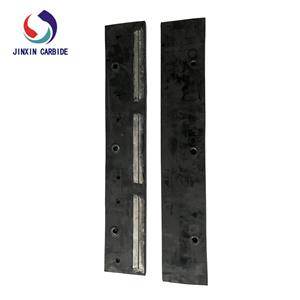 Industrial Tungsten Carbide Snow Plow Cutting Edge for Heavy Equipment
The carbide snow cutting edge is designe
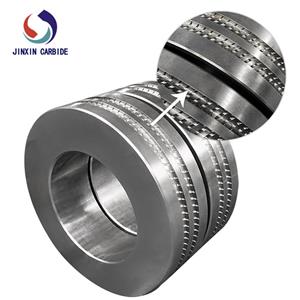 Carbide Roller Cemented Carbide Roll Rings/carbide Roller/tungsten
Tungsten carbide roller ring is a kind o
 Customizable Tungsten Jig Fishing Jig Lure
97% Tungsten high densityFast production
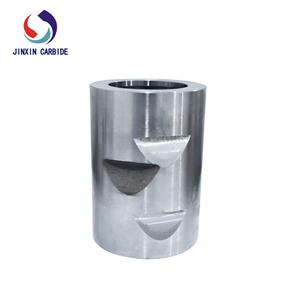 tungsten carbide forming die
Cemented Carbide Cold Heading Dies: Prec
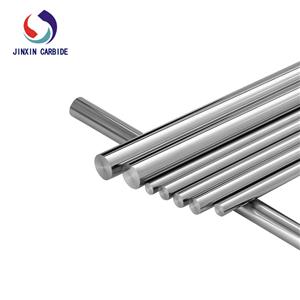 Carbide cutting tools grinding carbide/round carbide rods, Cermet metal rods
1. 100% virgin raw material2. High wear
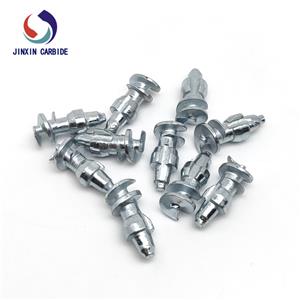 JX174 Removable Srew-in tire Studs Wheel Snow Carbide Spikes
Jinxin Studs are widely used in Northern
| WeChat/Phone : | +86 15573301853 |
|---|---|
| Fax : | +86-731-22332243 |
| Email : | jinxin012@ojinxin.com |