
Material Selection in Micro Tool Manufacturing: Why Ultrafine Tungsten Carbide Rods Are Becoming the Industry Standard
Introduction
As manufacturing technologies continue to evolve, the demand for micro-scale precision has increased significantly across industries such as printed circuit board (PCB) fabrication and medical device manufacturing. Tool geometries are becoming smaller, tolerances tighter, and production speeds higher.
In this environment, the selection of tool substrate material is no longer a routine decision—it is a critical factor that directly influences tool performance, process stability, and overall production efficiency.
Among the available material options, ultrafine tungsten carbide rods have gained increasing attention. This article examines the technical reasons behind this shift and outlines key considerations for engineers and procurement teams evaluating carbide materials for micro tooling applications.
The Role of Substrate Material in Tool Performance
Cutting tool performance is often evaluated based on coating, geometry, and machining parameters. However, the substrate material plays an equally important role, particularly in micro-scale applications.
At small diameters—typically below 1.0 mm—material limitations become more pronounced. Issues such as edge chipping, tool deflection, and premature wear are often linked to the microstructure of the carbide substrate.
Therefore, selecting a carbide rod with appropriate grain size and binder composition is essential for achieving consistent tool performance.
Microstructure Considerations: Grain Size and Binder Phase
Tungsten carbide materials are composed of hard WC particles bonded together by a metallic binder, typically cobalt. The size of these WC grains has a direct impact on mechanical properties.
Grain Size Effects
Coarse grain carbide offers higher toughness but lower hardness
Fine and ultrafine grain carbide provides higher hardness and better wear resistance
In micro tooling applications, ultrafine grain structures (submicron level) are generally preferred due to their ability to support sharp cutting edges and resist wear under high-speed conditions.
Binder Content Optimization
While increasing cobalt content can improve toughness, excessive binder may reduce hardness and edge retention. For micro tools, a balanced composition is required to ensure:
Adequate fracture resistance
Stable edge geometry
Consistent machining performance
This balance is one of the defining characteristics of high-quality ultrafine carbide rods.
Application Focus: PCB Micro Drilling
Process Requirements
PCB micro drilling represents one of the most demanding applications for carbide rods. Modern HDI boards require:
Hole diameters often below 0.2 mm
High spindle speeds exceeding 100,000 RPM
Continuous operation in high-volume environments
Under these conditions, tool material must maintain dimensional stability and resist wear over extended cycles.
Material Performance Impact
Ultrafine carbide rods contribute to improved performance in several ways:
Reduced edge wear, maintaining hole quality over time
Improved fracture resistance, lowering tool breakage rates
Consistent material behavior, enabling predictable tool life
From a manufacturing perspective, these factors help reduce downtime and improve yield.
Application Focus: Medical Tooling
Precision and Reliability Requirements
Medical tool manufacturing introduces a different set of challenges. In addition to precision, there is a strong emphasis on repeatability and reliability.
Applications such as dental burs and surgical cutting instruments require:
Tight dimensional tolerances
Smooth surface finishes
Consistent performance across production batches
Material Contribution
Ultrafine carbide rods support these requirements by offering:
Stable microstructure for predictable machining
High edge integrity for fine cutting features
Reduced variability between tools
This consistency is especially important in regulated industries where process validation is required.
Dimensional Control and Manufacturing Quality
Beyond material composition, dimensional accuracy of carbide rods is another critical factor.
Key parameters include:
Diameter tolerance
Straightness
Roundness
Surface condition
Variations in these parameters can lead to instability during grinding and inconsistencies in finished tools. High-quality rods are manufactured with tight control over these characteristics to ensure compatibility with precision grinding equipment.
Evaluating Supplier Capability
When sourcing ultrafine carbide rods, it is important to evaluate not only the material specification but also the supplier’s manufacturing capability.
Key Evaluation Criteria
Powder Quality and Consistency
The foundation of material performanceSintering Process
Advanced methods such as HIP improve density and reduce internal defectsGrinding and Finishing Precision
Determines final dimensional accuracyQuality Control Systems
Ensures repeatability across batchesSupply Stability
Critical for long-term production planning
Total Cost Considerations
While ultrafine carbide rods typically come at a higher unit cost, their impact on overall manufacturing cost should be evaluated holistically.
Factors to consider include:
Tool life and replacement frequency
Scrap rates and rework
Machine downtime
Process stability
In many cases, higher-quality material results in lower total cost of ownership, particularly in high-volume or high-precision applications.
Industry Trends and Future Outlook
Several trends are expected to further increase the importance of ultrafine carbide materials:
Continued miniaturization in electronics
Growth of advanced medical technologies
Increased automation and high-speed machining
As these trends develop, the demand for materials that can support precision and consistency will continue to grow.
Conclusion
Material selection is a foundational decision in micro tool manufacturing. Ultrafine tungsten carbide rods offer a combination of hardness, wear resistance, and structural stability that makes them well-suited for demanding applications in PCB and medical industries.
For engineers and procurement professionals, understanding the relationship between material properties and tool performance is essential for making informed decisions.
About Our Approach
We focus on supplying ultrafine tungsten carbide rods designed for precision applications, with an emphasis on consistency, dimensional control, and long-term reliability.
Our goal is to support customers not only with materials, but with a deeper understanding of how those materials perform in real-world manufacturing environments.
Contact
For technical discussions or material evaluation:
👉 Share your application details
👉 Request samples for testing
👉 Receive engineering-focused recommendations
Final Thought
In micro manufacturing, performance is built from the material up. Choosing the right substrate is the first step toward achieving consistent results.
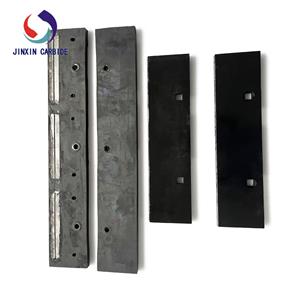 Industrial Tungsten Carbide Snow Plow Cutting Edge for Heavy Equipment
The carbide snow cutting edge is designe
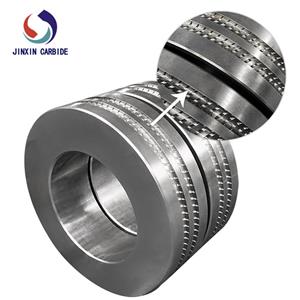 Carbide Roller Cemented Carbide Roll Rings/carbide Roller/tungsten
Tungsten carbide roller ring is a kind o
 Customizable Tungsten Jig Fishing Jig Lure
97% Tungsten high densityFast production
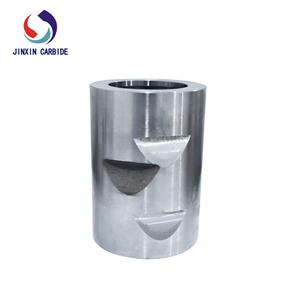 tungsten carbide forming die
Cemented Carbide Cold Heading Dies: Prec
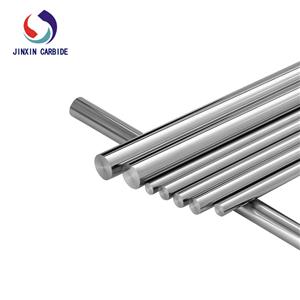 Carbide cutting tools grinding carbide/round carbide rods, Cermet metal rods
1. 100% virgin raw material2. High wear
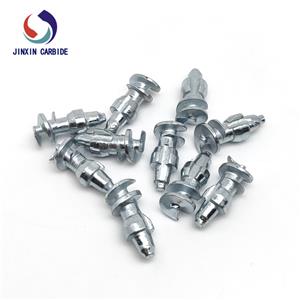 JX174 Removable Srew-in tire Studs Wheel Snow Carbide Spikes
Jinxin Studs are widely used in Northern
| WeChat/Phone : | +86 15573301853 |
|---|---|
| Fax : | +86-731-22332243 |
| Email : | jinxin012@ojinxin.com |