
The "Heart's Armor" of Concrete Pumps: Unveiling How Wear Plates Protect the Steel Arteries' Every Beat
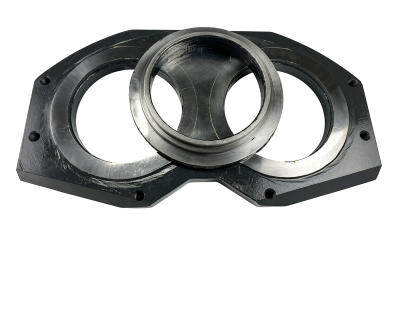
On the roaring construction site, concrete pump trucks act like the city's "steel giants," continuously delivering ready-mix concrete to heights of tens or even hundreds of meters. At the core of this high-pressure conveying system—the pumping mechanism—lies a set of components that endure the most rigorous tests: wear plates. Though inconspicuous, they are hailed as the "heart's armor" of the concrete pump, and their performance directly determines the pumping efficiency, service life, and operating costs of this multi-million dollar piece of equipment.
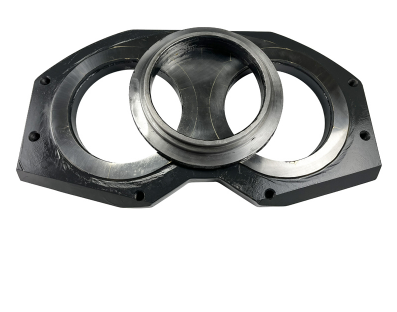
Facing the Toughest Wear and Tear Battlefield
Wear plates are mainly installed on the contact surface between the concrete pump's hopper and the S-valve (or gate valve). Their function is a combination of "foundation" and "shield".
Sealing Foundation: They form a high-pressure sealing pair with the S-valve. During the reciprocating switching several times per second, they must ensure that concrete at hundreds of millions of Pascals is tightly sealed within the conveying cylinder, preventing pressure leakage that could lead to weak pumping or even failure.
Wear-Resistant Shield: They directly withstand the continuous high-speed scouring and grinding of sand, gravel, and aggregates (especially high-strength granite and quartz) in the concrete mixture. This wear is destructive, and the working environment is described as "high-pressure sealing on sandpaper."
The Pinnacle of Materials Science Competition
To cope with this extreme working condition, the materials of wear plates have undergone continuous upgrades:
High-chromium alloy cast iron: The current mainstream choice. It has high hardness and excellent wear resistance. Through precision casting and heat treatment, it can maintain a relatively long service life under the repeated cutting of aggregates.
Metal-ceramic composite materials: A cutting-edge technology direction. Superhard ceramic particles such as aluminum oxide and silicon carbide are compounded in a metal matrix. The wear resistance can be several times that of traditional materials, but the cost and processing difficulty are also higher.
Surface strengthening technology: Such as laser cladding and plasma arc welding, a more wear-resistant alloy layer is fused onto the surface of the base plate, achieving a combination of "strength and flexibility," possessing both overall toughness and ultra-high surface hardness.
Dual Protection of Economy and Safety
The value of a high-quality wear plate far exceeds its cost:
Reduced overall costs: It protects the more valuable S-valve assembly and conveying cylinder. Regularly replacing the wear plate can save several times the cost compared to replacing the entire valve assembly, making it a core element of preventive maintenance.
Ensuring construction safety and efficiency: Excessive wear on the wear plate can lead to seal failure, pressure drop, increased risk of pipe blockage, and even system failure and downtime, causing significant losses at critical construction stages.
In a sense, the replacement cycle of the wear plate is a key indicator of the working efficiency and maintenance level of a concrete pump. This hard steel plate, through its own wear and tear, withstands the "torrent" of concrete, silently protecting every powerful and reliable pulsation of this most important "steel artery" in modern construction projects.
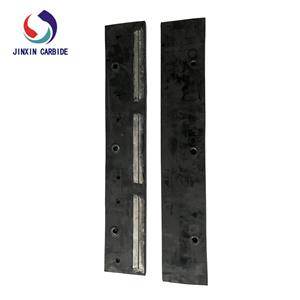 Industrial Tungsten Carbide Snow Plow Cutting Edge for Heavy Equipment
The carbide snow cutting edge is designe
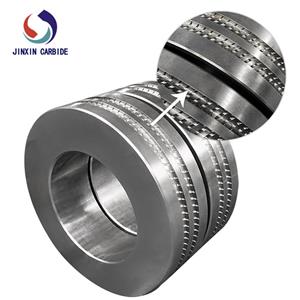 Carbide Roller Cemented Carbide Roll Rings/carbide Roller/tungsten
Tungsten carbide roller ring is a kind o
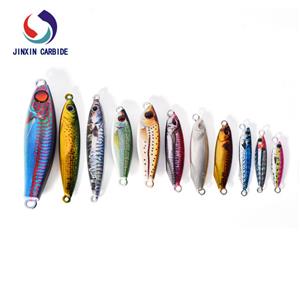 Customizable Tungsten Jig Fishing Jig Lure
97% Tungsten high densityFast production
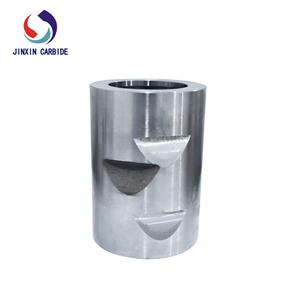 tungsten carbide forming die
Cemented Carbide Cold Heading Dies: Prec
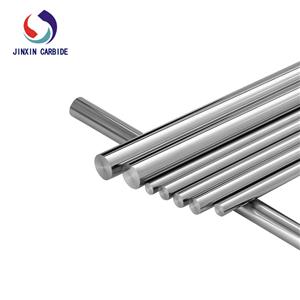 Carbide cutting tools grinding carbide/round carbide rods, Cermet metal rods
1. 100% virgin raw material2. High wear
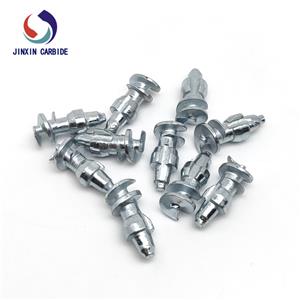 JX174 Removable Srew-in tire Studs Wheel Snow Carbide Spikes
Jinxin Studs are widely used in Northern
| WeChat/Phone : | +86 15573301853 |
|---|---|
| Fax : | +86-731-22332243 |
| Email : | jinxin012@ojinxin.com |