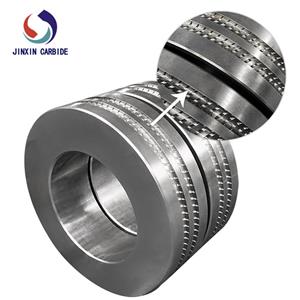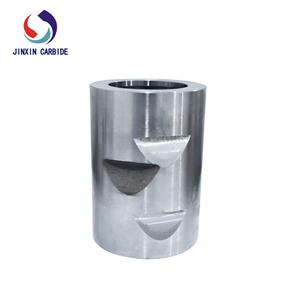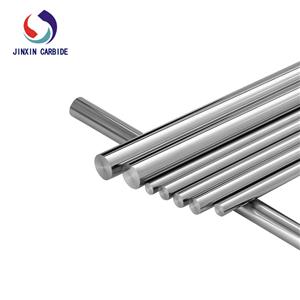
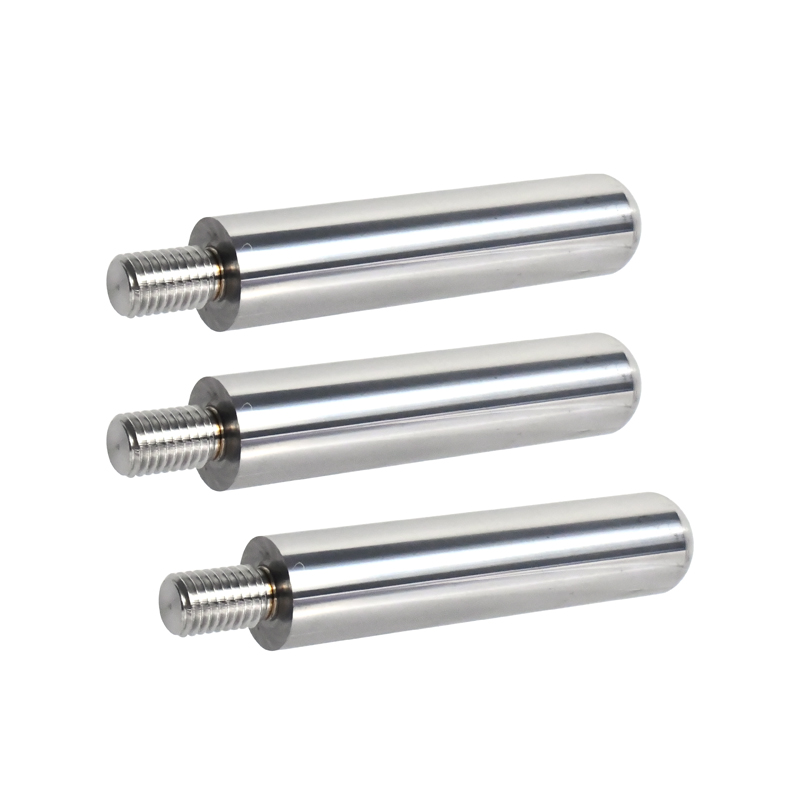
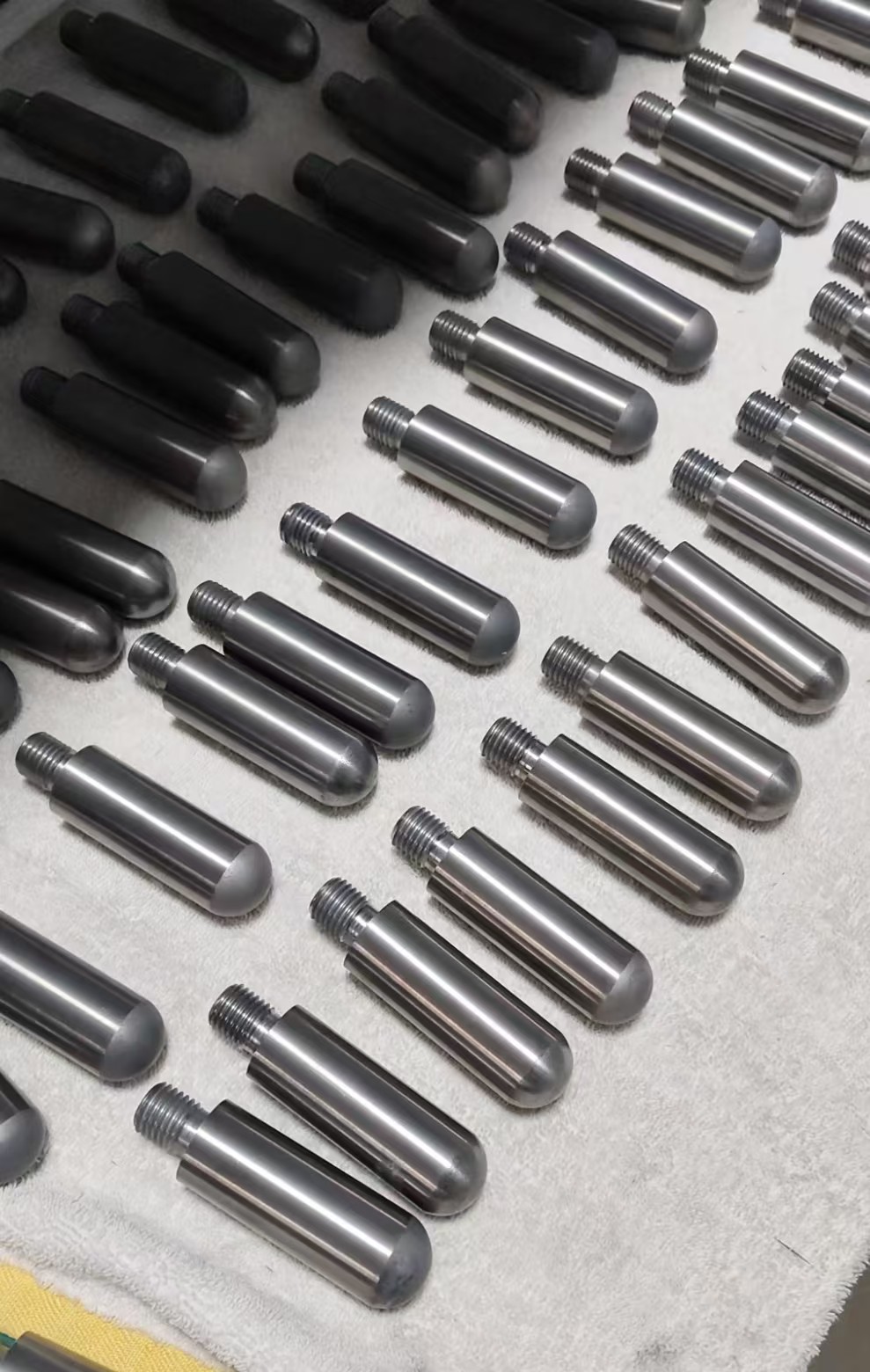
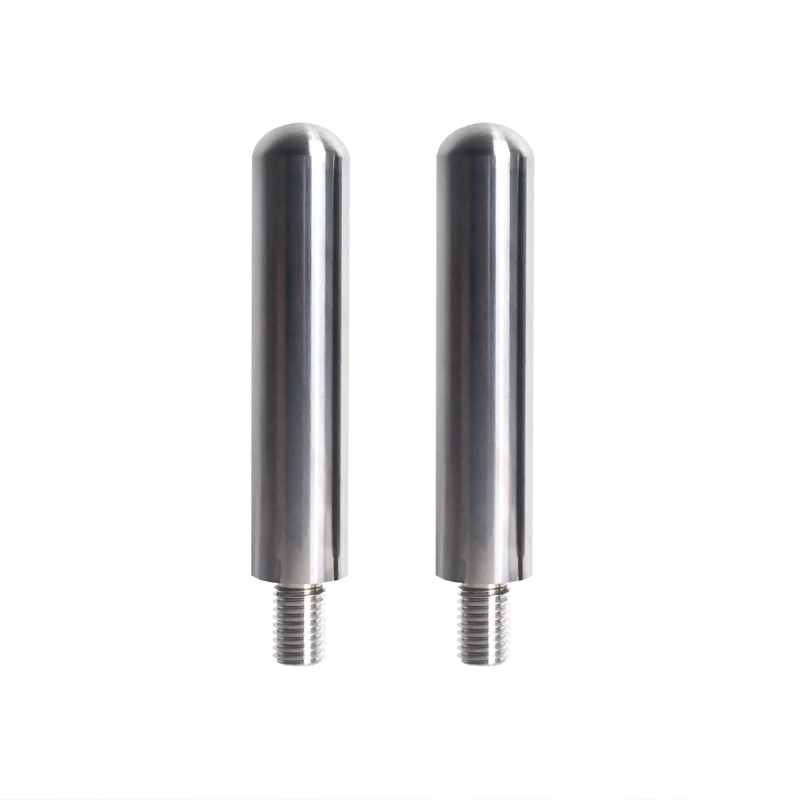
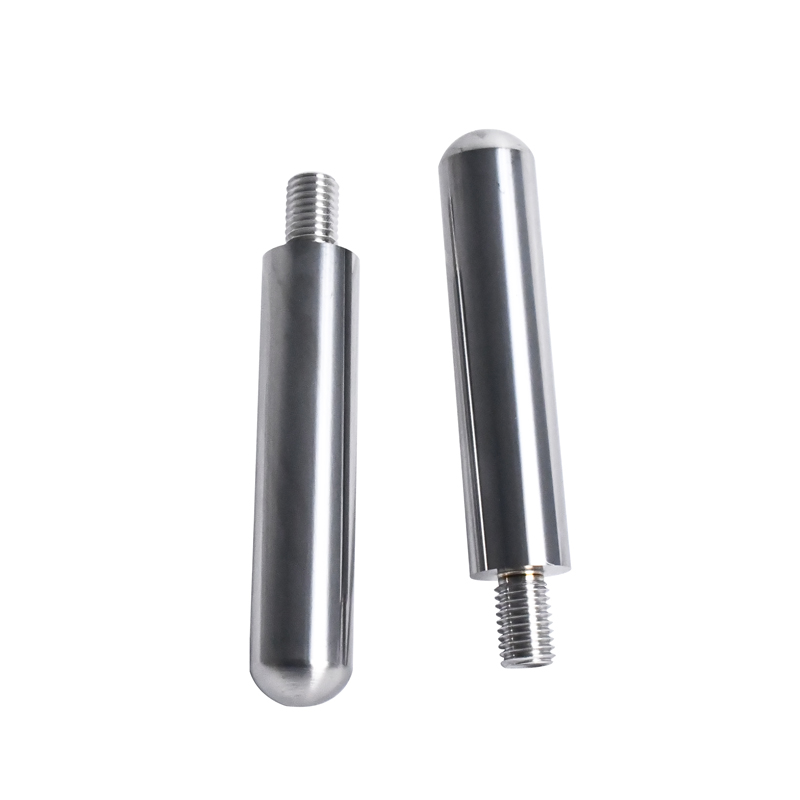
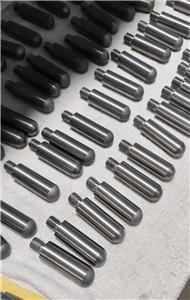
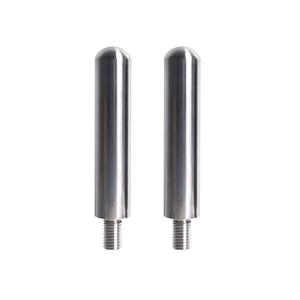
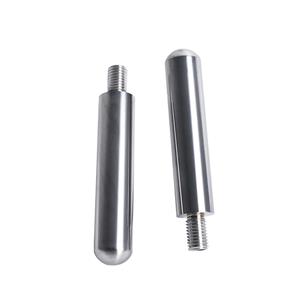
tungsten carbide peg pin for sand mill / Cermet metal pin
Brand Name : JINXIN
Place of Origin : CHINA
MOQ : 10PCS
Packaging Details : Carton
Delivery Time : 20-30 days
Matierial : Tungsten carbide、Cermet
1. Core Performance: Wear and damage resistance far surpasses traditional metals.
This is its most critical advantage, directly determining its service life and precision stability.
Hardness and Wear Resistance: Based on a cemented carbide substrate (primarily composed of tungsten carbide and cobalt), it achieves a room-temperature hardness of HRA88-HRA93, with wear resistance 5-10 times that of ordinary steel pins. Even under conditions of long-term, high-frequency insertion and removal, and rotational friction (such as mold positioning and equipment hinges), it prevents wear-induced gap enlargement and maintains initial positioning accuracy.
Impact and Deformation Resistance: Compared to brittle materials like ceramics, cemented carbide pins possess considerable bending strength and toughness (for example, YG8 grade boasts a bending strength exceeding 2100 MPa). They are less susceptible to breakage or plastic deformation when subjected to impact or radial loads, making them ideal for dynamic positioning in mechanical transmissions. 2. Precision Advantage: Dimensionally Stable, Suitable for High-Precision Requirements
Industrial applications place extremely high demands on pins for dimensional consistency and long-term stability, and carbide pins precisely meet these requirements.
High Processing Precision: Through processes such as fine grinding and polishing, micron-level dimensional tolerances (e.g., diameter tolerance ±0.002mm) can be achieved, along with low surface roughness (Ra ≤ 0.2μm). This allows for a precise fit (either a transition fit or an interference fit) with the hole, preventing loosening-induced equipment vibration or error accumulation. This is commonly seen in applications such as mold guide pins and precision instrument locating pins.
High Thermal Stability: Carbide has a low coefficient of thermal expansion (approximately 1/3 that of steel). Even in environments with large temperature fluctuations (such as high-temperature molds and machining equipment), dimensional stability is minimal, preventing thermal expansion and contraction from compromising fit accuracy, further ensuring stable equipment operation. 3. Application Scenario: Focusing on High-Load, High-Demand Applications
Due to its unique performance, its applications are primarily focused on applications where traditional pins are "struggling." Typical examples include:
Mold Industry: Used as mold locating pins and guide pins for precise positioning of stamping and injection molds, they withstand the impact and friction of frequent opening and closing, preventing product scrap caused by mold misalignment.
Mechanical Transmission: Used as connecting pins and retaining pins in gearboxes and motor shafts, they maintain the fixed relationship between components and prevent loosening under high-speed rotation or alternating loads.
Precision Instruments: Applications such as medical equipment (for positioning surgical instruments) and aerospace components (for connecting precision mechanisms) require long-term micron-level accuracy and withstand harsh operating conditions (such as corrosion and high temperatures).
Wear-Resistant Components: Certain custom carbide pins can be used as wear-resistant pins in equipment (such as locating pins for printing press cylinders and wear-resistant pins for mining machinery), replacing easily worn steel pins and reducing maintenance frequency.